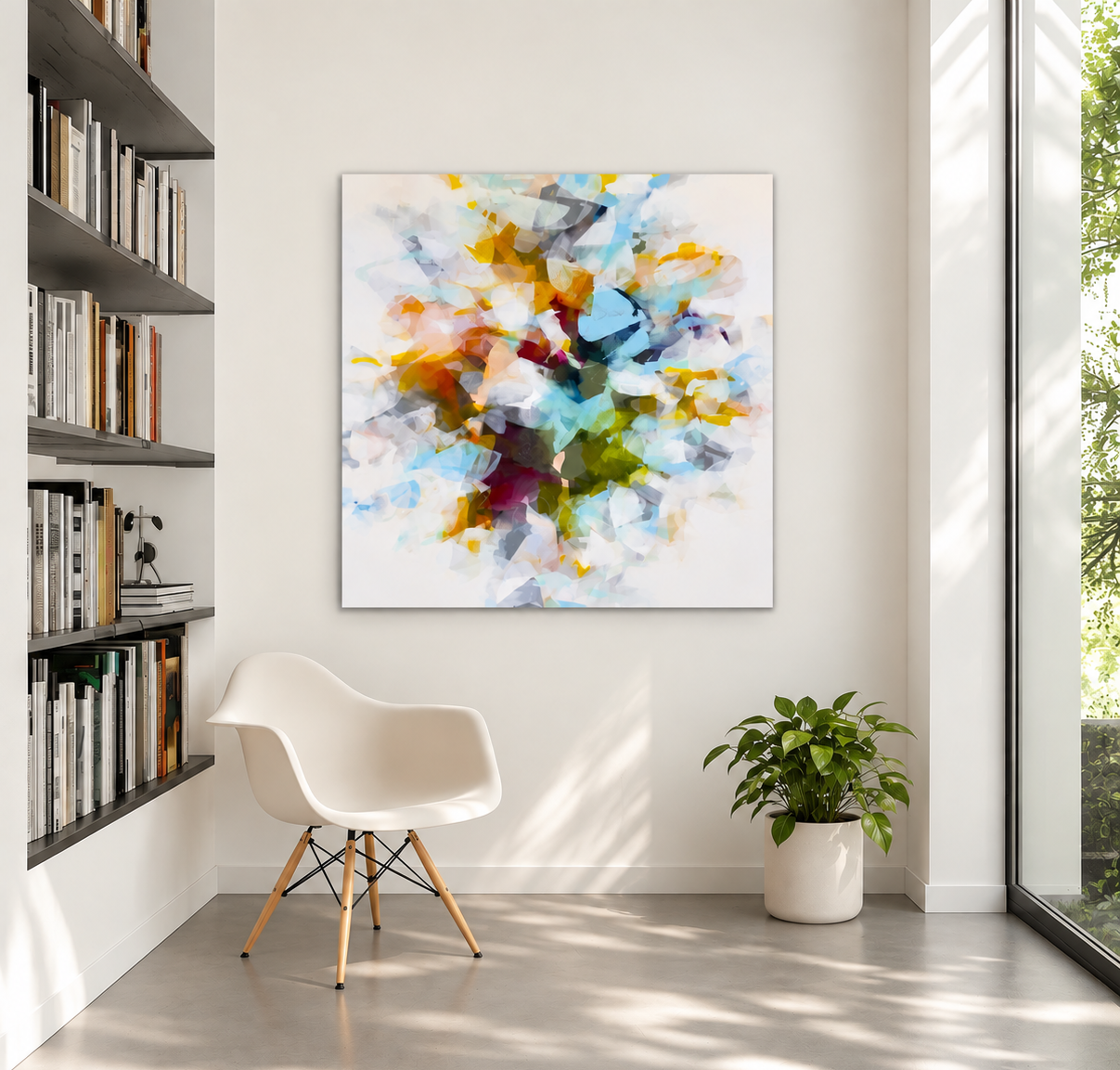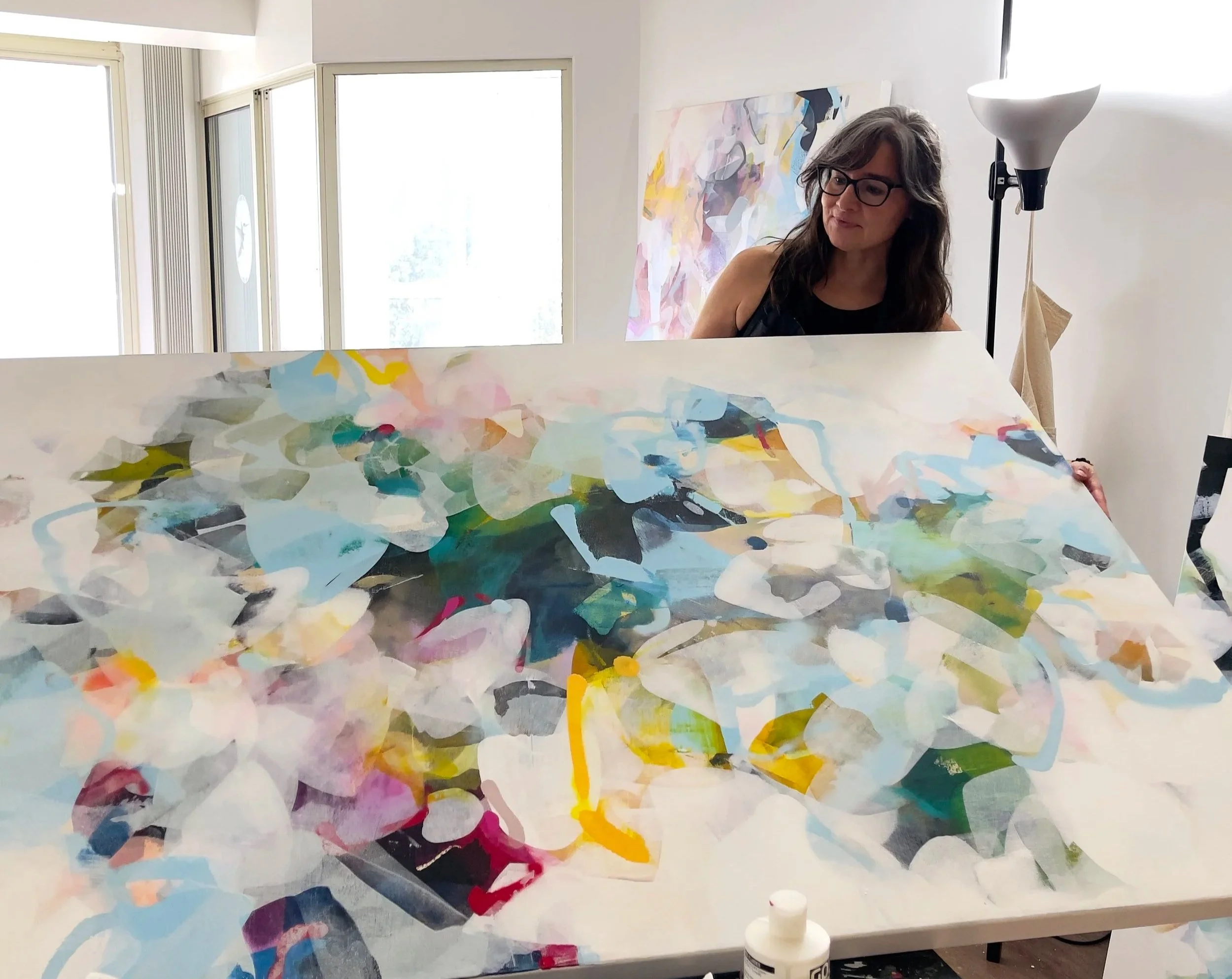
I've been painting abstracts for many years, largely guided by intuition. Certain colours, shapes, rhythms and atmospheres have always drawn me in, often without my knowing exactly why. Over time, I've begun to recognize some of the ideas and feelings that keep finding their way into my paintings.
Perhaps it takes years of making art to begin understanding what we've been expressing all along.
Nature has always been an important part of my visual world. I'm drawn to the way organic forms gather and overlap, how light changes the appearance of colours, and how movement and stillness can exist together in the same space. But I don't necessarily think of my paintings as being about nature.
Instead, I think nature has become part of my visual vocabulary. The relationships between forms, the rhythms, the colours and the sense of space all find their way into my work, transformed by memory and imagination. I'm not trying to recreate a particular place or experience. What emerges is something entirely abstract, yet it can still carry a sense of familiarity.
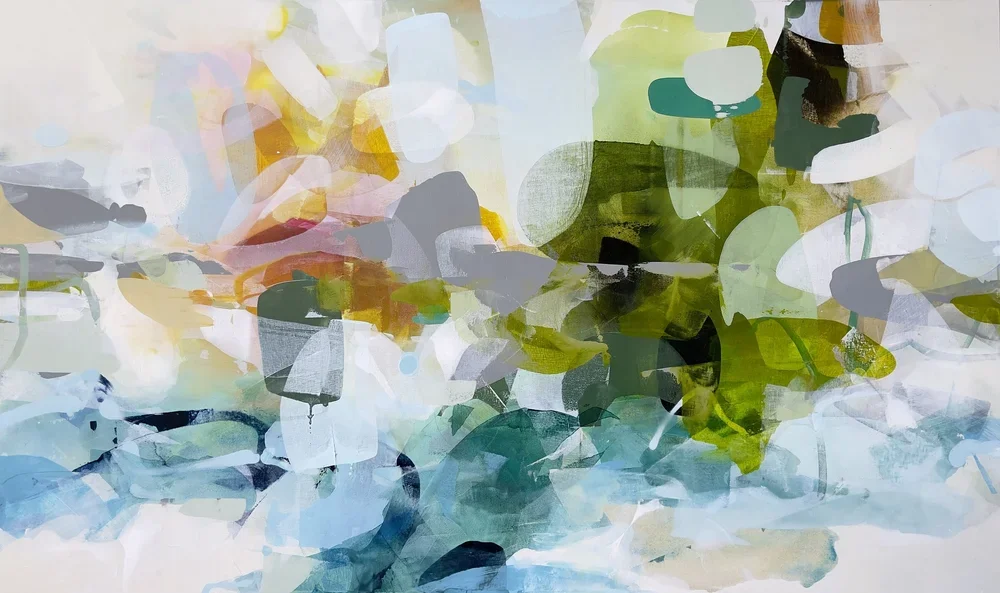
One thing I've come to recognize is that I tend to see my paintings as three-dimensional spaces, even though I'm working on a flat canvas. Shapes seem to gather, overlap, recede or come forward. Sometimes they form loose clusters; other times they spread across the surface in a more expansive way. I imagine these forms occupying a space of their own, even though they don't correspond to anything that exists in reality.
I find that fascinating about abstraction. Something can feel spatially convincing without representing anything recognizable.
Colour plays an equally important role in how these spaces develop. I've always loved exploring relationships between colours, particularly combinations that feel harmonious without necessarily being predictable. Inspiration can come from nature, but also from unexpected colour combinations I notice in everyday surroundings.
For me, harmony doesn't mean that everything needs to be perfectly balanced or that colours must follow conventional rules. Sometimes an unexpected colour or a small area of contrast brings an entire composition to life. Colours can create a sense of depth, warmth, openness or movement, depending on how they interact with the forms around them.
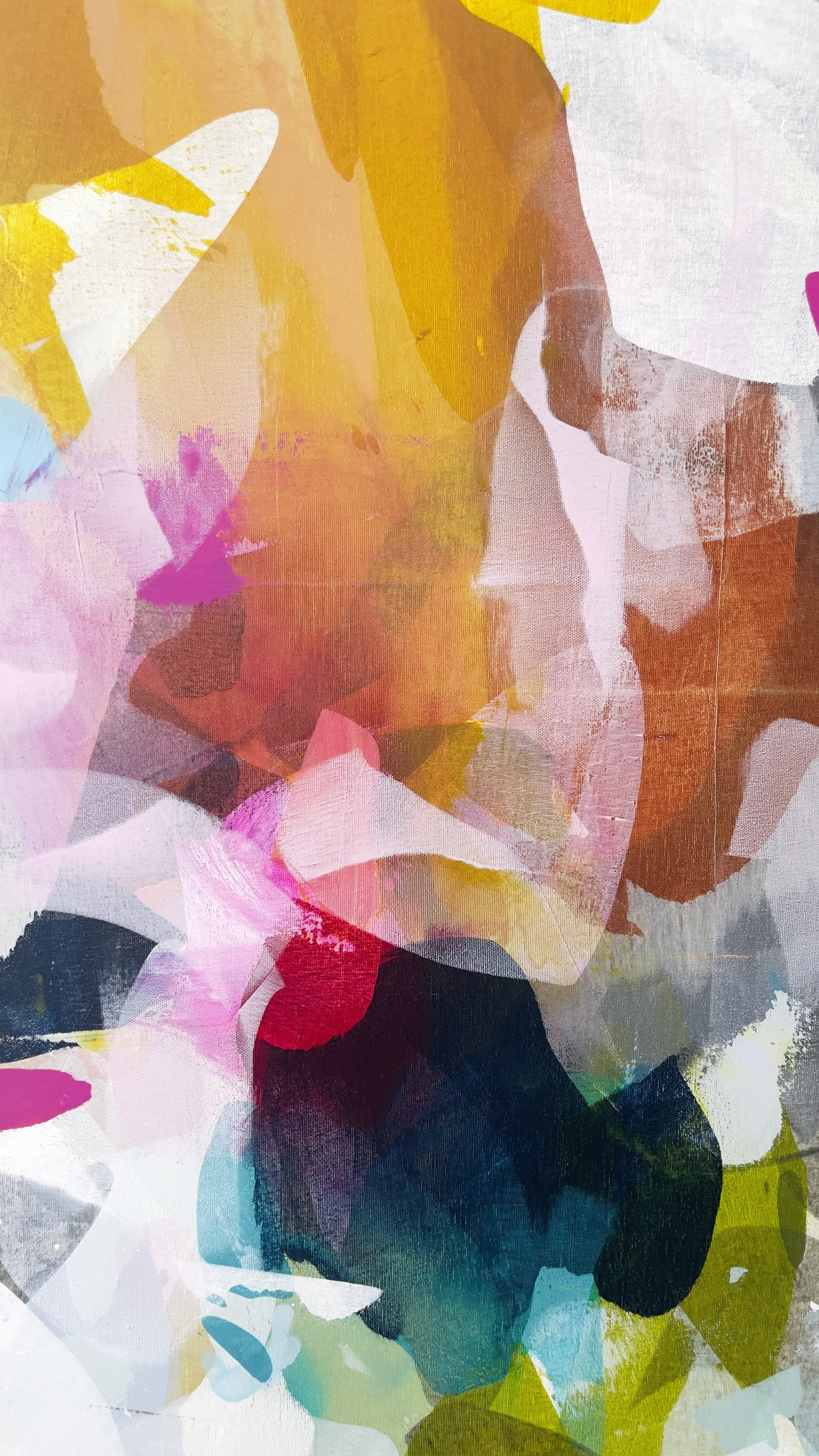
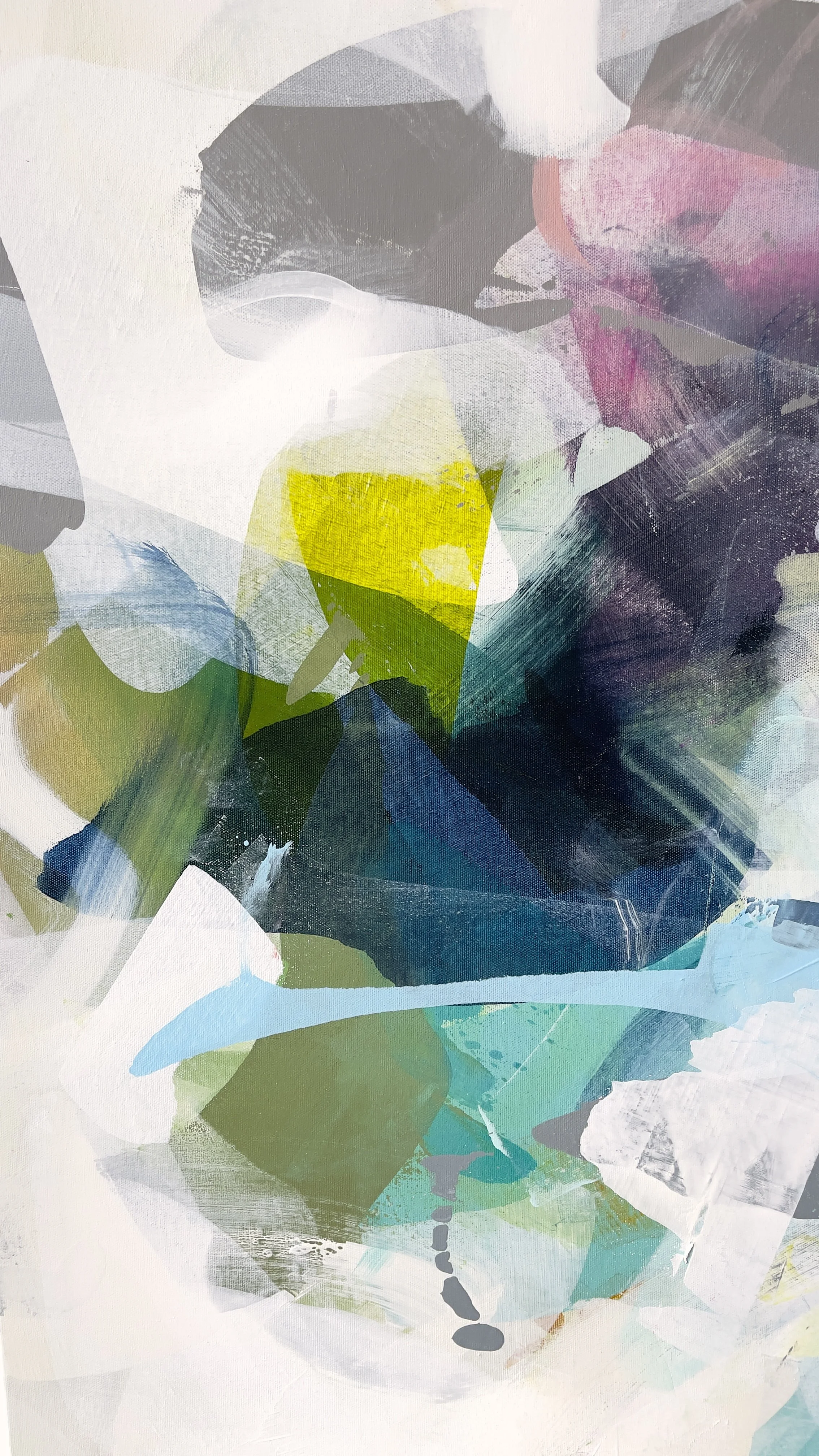
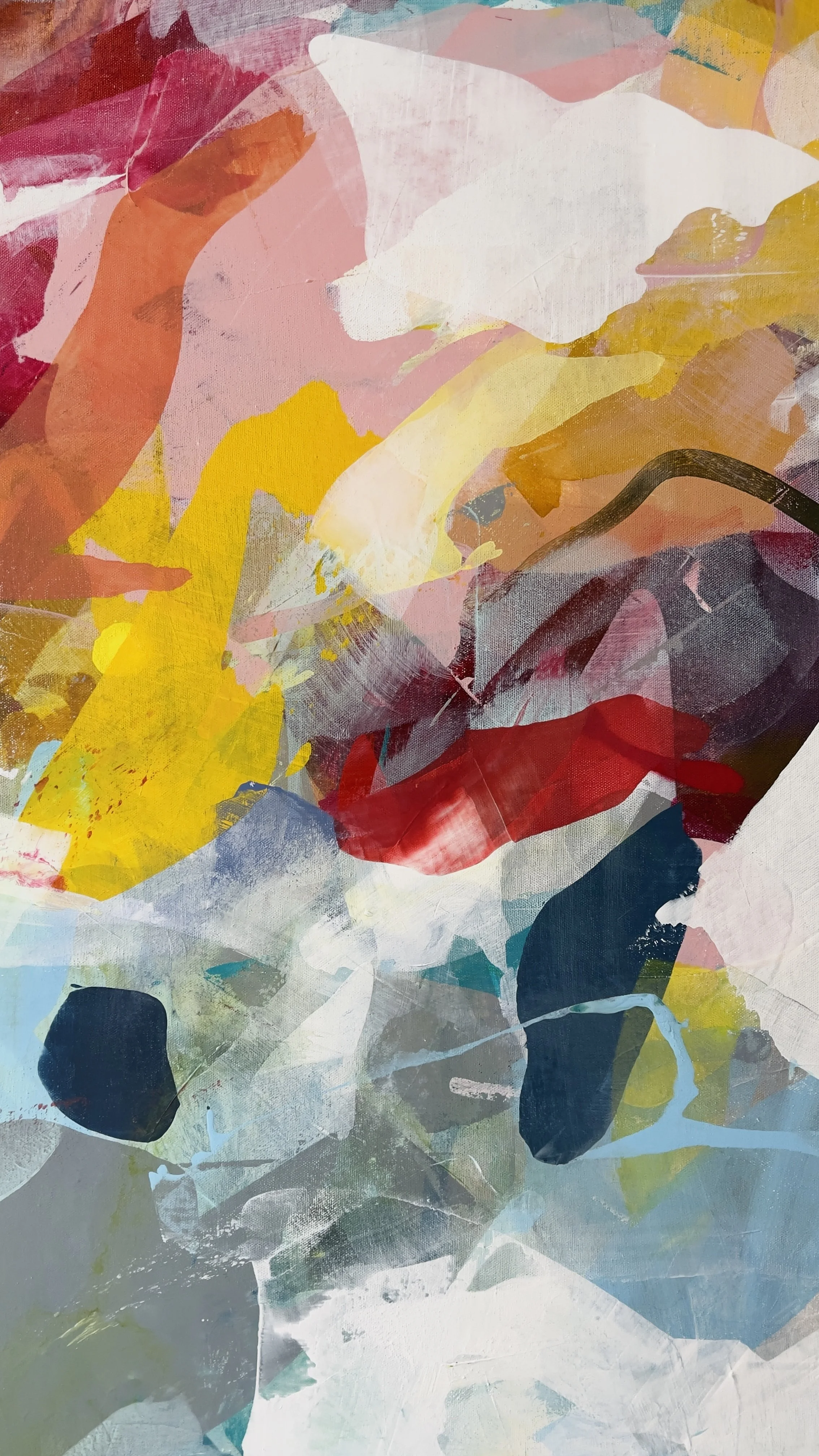
For me, it's difficult to separate colour from composition because I experience them together. What matters is how all these relationships come together, creating a sense of balance that I recognize more through feeling than through any particular formula.
Beyond these visual relationships, there's also a feeling I'm looking for in my paintings. It's difficult to define precisely, but I need to find something uplifting in them. That doesn't mean everything has to be bright or cheerful. I enjoy contrast, complexity and quieter moments, too. Sometimes it's a sense of joy or optimism; other times it's something more subtle, like openness or possibility. Whatever form it takes, it's something I recognize intuitively when the painting begins to feel right to me.
In a way, I develop a relationship with each painting as it evolves. Each one has its own character, its own challenges and surprises, and I find myself responding to it differently.
I'm also drawn to the coexistence of stillness and movement. I love paintings that have a sense of energy without feeling restless, or quietness without becoming static. In my own work, this often appears through the relationship between softer atmospheric areas and more defined shapes, or between open spaces and clusters of forms.
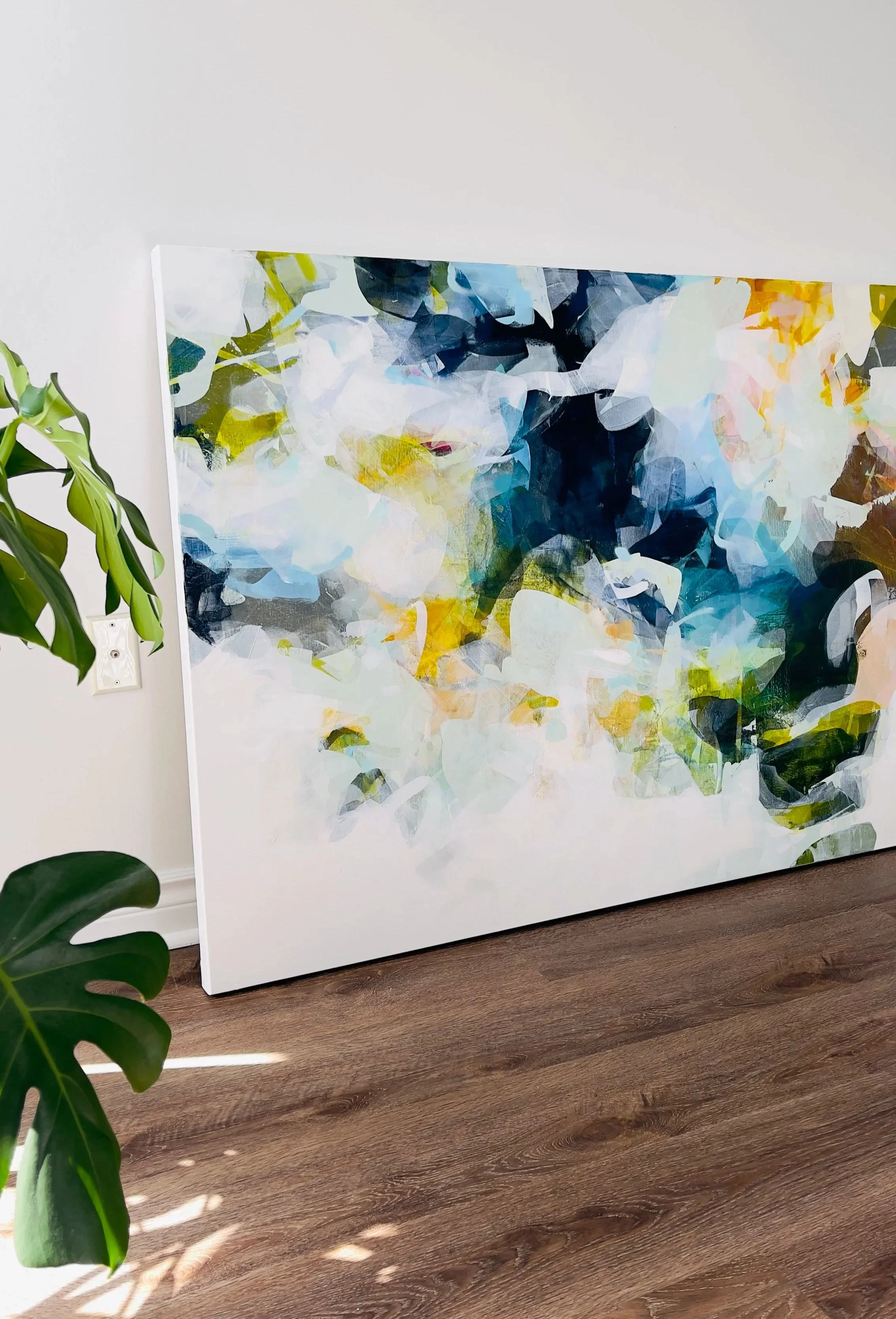
Perhaps this is part of what I mean when I think about a painting feeling alive. It's not necessarily about dramatic movement or strong contrasts. Sometimes it's a subtle relationship between colours, a particular arrangement of forms, or the feeling that something is gradually coming together.
My painting process reflects this interest in discovery. I don't usually begin with a clear image of what a painting will become. Sometimes I have a loose sense of direction—a particular flow, an arrangement of shapes, or a feeling of movement I want to explore. Other times, the starting point is much more open.
As I work, relationships between colours and forms begin to emerge, and I respond to what I see. A shape might suggest another, a colour might change the direction of the composition, or something unexpected might become the most interesting part of the painting. There is a constant exchange between what I intend and what I discover.
I think that's one of the things I enjoy most about painting. Even after years of experience, there's still an element of uncertainty. And I wouldn't want to lose that.
Looking back, I can see that many of these interests have been present in my work for a long time, even as my approach to painting has changed. I'm beginning to find words for things I've felt intuitively for years, and I suspect that understanding will keep changing as I continue to paint.
Ultimately, I'm not trying to create an image of a particular place or tell a specific story. I'm interested in creating spaces that feel alive, where colour and form come together in ways that invite curiosity and imagination.
And perhaps one of the things I appreciate most about abstraction is that these paintings don't need to mean the same thing to everyone. I like the idea that a painting can begin with my own observations and imagination, yet become something entirely different in the eyes of someone else. That it can continue to reveal something new, long after I've finished working on it.