
The Middle Is the Hardest Part
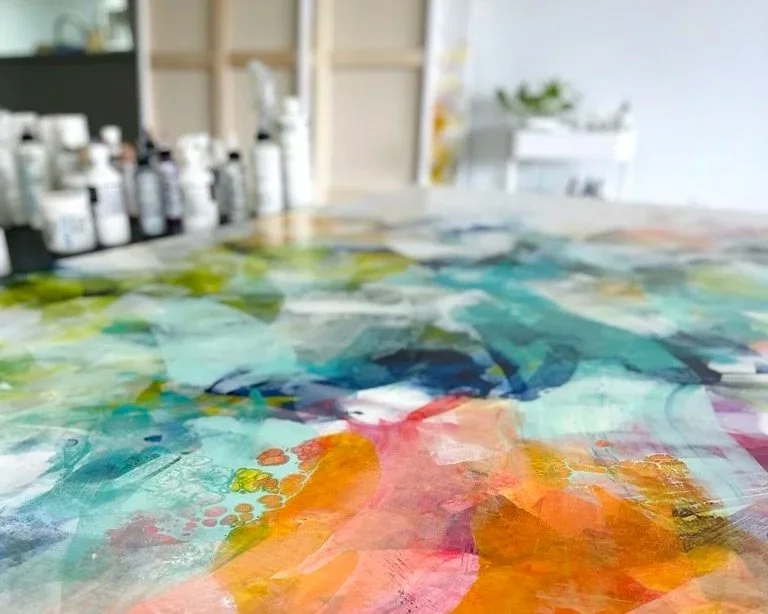
There’s a stage in almost every painting that feels uncertain to me. Not the beginning — that part is usually open and energizing. And not the end, when things start to settle and decisions feel clearer.
It’s the middle that challenges me most. By then, the first gestures are down. The canvas isn’t empty anymore. Something is taking shape — but it’s not cohesive yet. Colours overlap without fully relating. Some areas feel heavy, others unfinished. The painting can look busy, or flat, or simply confusing. There are many times I feel I am losing control of it. But that is part of the work.
The middle is when the painting stops cooperating with my initial idea or direction and starts asking for something more specific. A section might feel too dominant, or too weak. A colour might need to shift slightly. An edge might require for more clarity, or less.
It’s often not dramatic. It’s subtle. But the risk is overworking and making the challenge worse.
This is the point where patience becomes important.
Often that means stepping back and not touching it for a day or a week, and focusing on other paintings. Sometimes it means making one clear move instead of five small rushed ones. And sometimes it simply means continuing to work without fully knowing where it’s heading.
The middle feels awkward because the painting hasn’t decided what it is yet. And neither have I.
If I rush, I usually overwork it. I add layers that don’t help. I try to force a resolution before the painting is ready. But if I slow down, or better yet take a break, and then really look when I get back to it, things often start to clarify. The relationships between areas become more obvious. The next step feels less reactive and more intentional. This stage is less intuitive, and more calculated.
The painting doesn’t suddenly become perfect. But it becomes workable again. I’ve come to respect this phase. The discomfort doesn’t mean something is wrong. It often means the painting is moving beyond the initial spontaneity and into something more considered.
Most of the time, if I don’t rush the outcome, the middle leads somewhere I feel happy about.