
How I Know When a Painting is Complete (and when it isn’t)
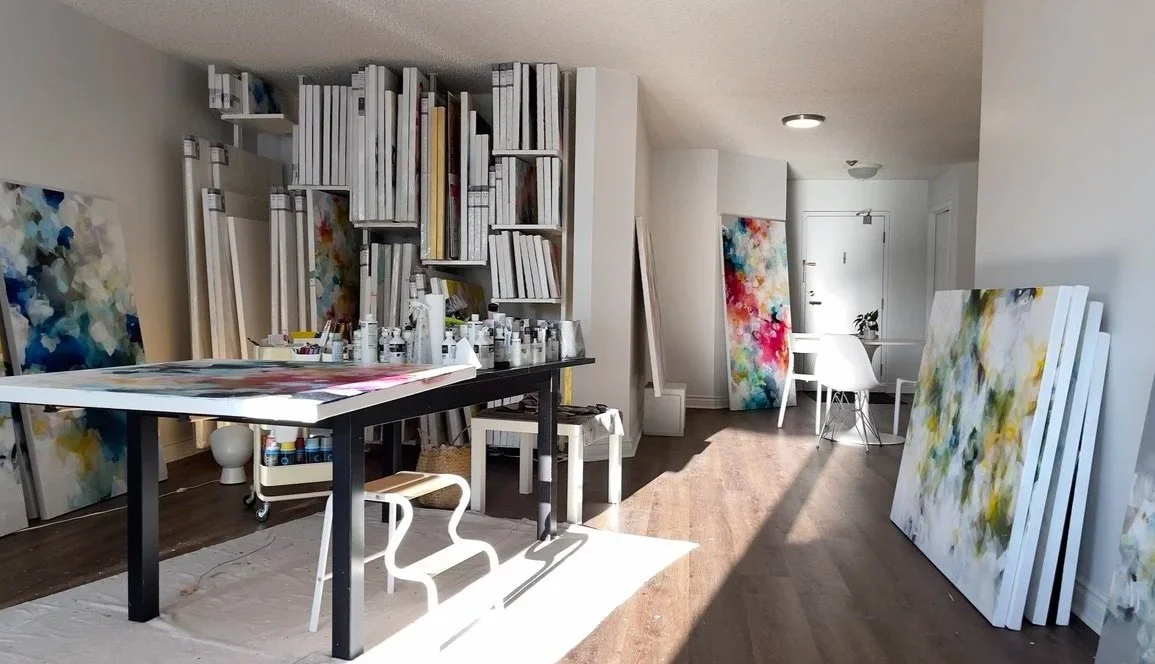
From the outside, a painting can look finished long before the artist feels done with it. From the inside, the difference between complete and unfinished is usually much quieter than people expect.
For me, it’s rarely about whether a painting looks resolved in the usual sense. Many of my paintings come together visually quite early. They could be framed, hung, and live comfortably in a space. That alone doesn’t tell me very much.
What matters more is whether the painting is still asking something.
When a painting isn’t complete, I feel a low-level tension around it. Not urgency — more like attention. I’ll keep turning it on the wall. I’ll see it differently in the morning than I did the night before. Certain areas keep drawing my eye — not because they’re wrong, but because they’re still open.
This often shows up in small ways:
an orientation that doesn’t quite feel settled,
weight that feels slightly off,
edges that haven’t decided how present they want to be.
These aren’t things I try to fix quickly. In fact, they usually become clearer when I stop working on the piece for a while — especially when I don’t yet know what the right move is. I’ll move on to another painting. I’ll let time pass. When I come back, what felt complicated before is often obvious.
When a painting is complete, something shifts. The questions quiet down. I can still look closely, but I’m no longer negotiating with it. The painting feels stable — not closed, but no longer asking me to intervene. I know how it wants to live in space, and I don’t feel the need to test other options.
That doesn’t mean the painting is perfect, or that nothing could be changed. It simply means that anything further would be optional, not necessary.
I’ve also learned that completeness and readiness aren’t always the same thing. A painting can feel complete to me and still benefit from being held back. I find that sometimes it’s better to let the work sit quietly for a while, without explanation or context, before it moves out into the world.
So when I say a painting is finished, I’m not responding to how it looks at first glance. I’m noticing whether it still pulls me into decision-making, or whether it feels settled and complete as it is.
When that happens, I no longer feel the urge to change it.